
An Indoor Obstacle Course: A Fun Activity to Help Your Child Move and Balance Using Simple Items
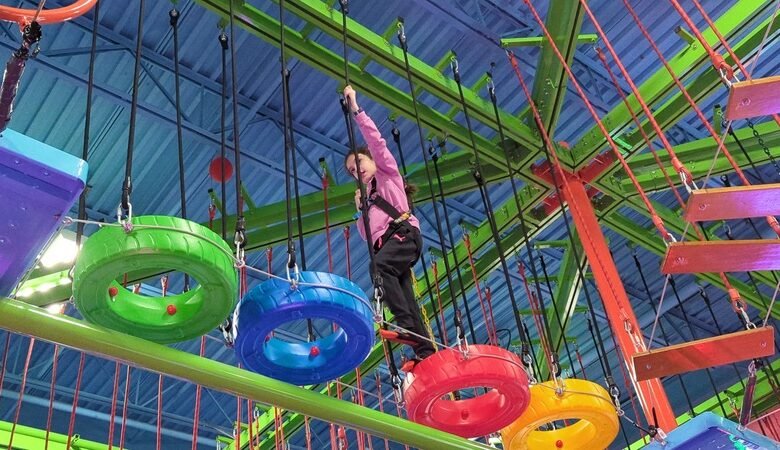
When the weather is hot or going outside is not an option, families can turn a small, safe area of the home into a space for movement and play. One of the simplest ideas is to create an indoor obstacle course where a child moves through stations for jumping, walking, balancing and crawling—without the need for exercise equipment or expensive supplies.
The idea is not to compete or test a child’s abilities, but to provide a fun activity that can be adapted to each child’s age, the available space and their individual abilities. Guidelines from the Centers for Disease Control and Prevention (CDC) indicate that children ages 3 to 5 should be active throughout the day, while children and adolescents ages 6 to 17 need 60 minutes or more of physical activity each day.
What do you need to make the course?
Start with an area free of sharp corners and furniture that could fall, then use simple, safe household items such as:
- Firm cushions placed on the floor.
- Paper or floor-safe adhesive tape to draw a line to walk along.
- Plastic cups or lightweight markers to create a zigzag path.
- A small basket and lightweight balls for a target-throwing station.
- A piece of fabric or a mat to mark the starting and finishing points.
Avoid using chairs or tables as jumping platforms, and do not set up the course near stairs, windows, glass or the kitchen.
6 easy stations in 15 minutes
1. Walk the line: Draw a straight or zigzag line on the floor and ask the child to walk along it slowly. Older children can try walking backward if the space is safe and they are supervised.
2. Jump between the markers: Place paper markers at distances appropriate for the child’s age, and have them move between the markers using wide steps or small jumps.
3. Cushion path: Arrange firm, low cushions on the floor for the child to step between or around. For very young children, simply walking around the cushions is enough instead of climbing onto them.
4. Animal movements: Choose a few meters where the child can imitate the walk of a penguin, rabbit or bear. This station adds imagination and laughter to the activity.
5. Throwing into the basket: Place a basket at an appropriate distance and use a foam ball or a rolled-up sock. Give the child three attempts before moving on to the next station.
6. Calm finish: Make the final station a slow walk with calm breathing and drinking water as needed, rather than ending the play abruptly.
How can the activity be adapted by age?
- Ages 3–5: Keep the course short, give one-step instructions and focus on walking, crawling and simple jumping.
- Ages 6–9: Add jump counting or have the child carry a lightweight ball during part of the course. The child can also help design it.
- Ages 10 and older: Ask the child to invent a new station or design a course for family members, while keeping the safety rules unchanged.
Do not make speed the only goal. The challenge can instead focus on accuracy, balance or completing the course calmly, so that children with different abilities can enjoy it.
Safety first
The activity should take place under adult supervision, especially for young children. Check the floor before starting, remove small toys that could cause trips, secure slippery rugs and leave enough space between the child and the furniture. The CDC recommends that activities be age-appropriate and enjoyable, with suitable protective equipment used for activities that require it, such as cycling or riding a scooter.
If a child has a chronic illness, a disability or a health condition that affects movement, it is best to ask a doctor or specialist about activities suited to their abilities rather than assuming that all exercises are appropriate.
Make the child part of the idea
After the first round, ask your child: Which station would you like to change? The child can draw a map of the course or choose funny names for the stations. UNICEF explains that play helps children explore the world and build important skills, and also suggests screen-free family activities suitable for different ages.
In this way, the activity becomes more than a way to fill time—it is an opportunity for movement, imagination and family cooperation. Start with a small three-station course, then gradually develop it if the child enjoys it.