
Photo Story | October 1, 1958: The Day NASA Began Operations and Opened a New Era in Space
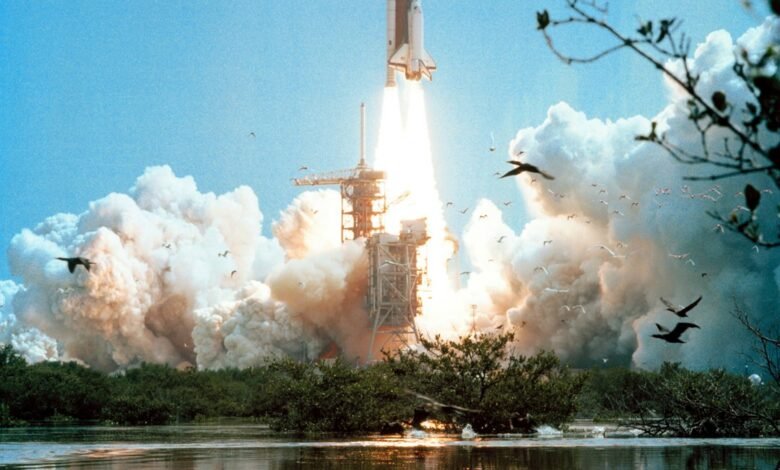
On the morning of October 1, 1958, a new chapter began in the history of science and space exploration. On that day, the National Aeronautics and Space Administration (NASA) officially began operations, just months after the signing of the U.S. Space Act that established the new civilian agency.
From NACA to NASA
NASA did not emerge from nowhere. It inherited the infrastructure and research expertise of the National Advisory Committee for Aeronautics (NACA), which was established in 1915. NASA’s historical records show that the transition included three major research laboratories and two test facilities, along with approximately 8,000 employees and an annual budget of $100 million at the time.
U.S. President Dwight Eisenhower had signed the National Aeronautics and Space Act on July 29, 1958, before the agency officially began work on October 1. T. Keith Glennan became NASA’s first administrator, while Hugh Dryden became his deputy.
The Photograph That Documents the Beginning
The official photograph accompanying this story comes from the NASA Archives and shows Glennan and Dryden with President Eisenhower during the agency’s founding period. The photograph derives its significance from documenting the people who led the institution at a moment when the United States was shifting to a unified civilian space program.



Why Was a New Space Agency Created?
NASA was established at the heart of an accelerating space race. The Soviet Union’s launch of the Sputnik 1 satellite in October 1957 prompted the United States to reorganize its space efforts, while satellite and rocket programs were distributed among different institutions.
With the start of NASA’s operations, the agency became responsible for leading U.S. civilian space activities. Within days of its opening, steps began that would lead to the human spaceflight program, followed by Project Mercury and, later, Gemini, Apollo and the Moon landing.
From a Founding Photograph to a Lasting History
Sixty-eight years after that day, the founding photograph appears to mark the starting point of a journey that extended beyond the borders of the United States. From lunar missions to spacecraft that explored the planets, and from space telescopes to the International Space Station and programs to return to the Moon, NASA became one of the world’s leading scientific and space institutions.
The significance of October 1, 1958, remains clear: it was the day when disparate decisions, legislation and expertise were transformed into an institution that officially began its work and went on to help reshape humanity’s relationship with space.
Sources
NASA — NASA’s Beginning
NASA History — NASA Begins Operations
Image source: NASA. An official archival photograph associated with the agency’s founding.