
From 7 Gates to 8: How Jeddah’s Historic Gates Shaped the Movement of Pilgrims and Merchants Over the Centuries
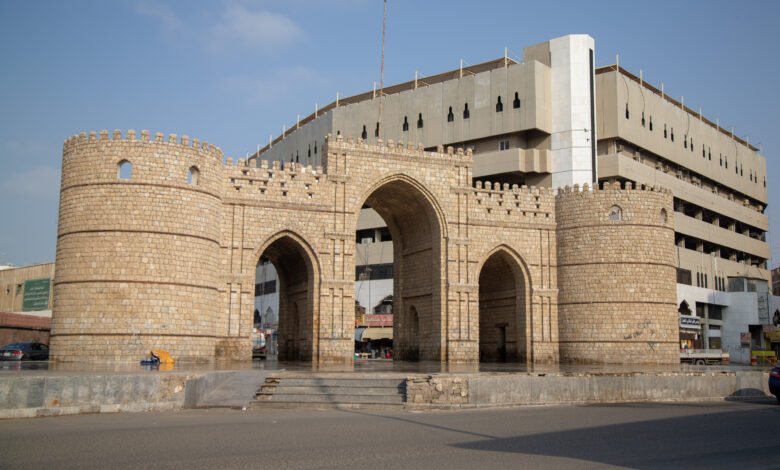
The gates of Jeddah’s historic wall were not merely entrances to the city; they were points that organized the movement of pilgrims, merchants, caravans and goods, while recounting an important part of Jeddah’s development as a Red Sea port and a key stop on the route taken by those heading to Makkah.
Official Saudi sources, including Saudipedia and materials from the Saudi Press Agency, document the story of these gates and their role in the city’s history, from the early stages of fortification through Jeddah’s expansion beyond the wall.
Key milestones
- The wall initially had seven main gates.
- Among the best known were Makkah Gate, Sharif Gate and Medina Gate.
- A “New Gate” was added as transportation developed and vehicles began entering the city, bringing the total to eight gates.
- Jeddah’s wall was removed in 1947 as urban development expanded.
- Some of the gates remain witnesses to the city’s history and the movement of pilgrims and trade.
For more historical and arts stories, follow the Culture and Arts section.
Seven gates at the beginning
Jeddah’s wall was built to protect the city from dangers arriving by sea and land. It was reinforced with towers and fortifications and surrounded by a defensive moat. Initially, the wall contained seven gates that controlled entry and exit and connected the city to the surrounding roads.




Among the best known were Makkah Gate, which was linked to the road leading to Makkah; Sharif Gate; and Medina Gate, which was connected to the road heading toward Medina.
From defensive gates to gateways for trade and pilgrimage
The gates’ importance was not solely military. As Jeddah grew in prominence as a port receiving pilgrims and merchants, the wall’s entrances became part of the city’s daily system. Caravans, goods and people arriving from the Red Sea and heading to Jeddah’s markets or to Makkah passed through them.
This role tied the gates directly to economic and social life. They determined the directions of movement, connected the port with the markets and overland routes, and at the same time preserved the city’s ability to regulate entry and exit.
“New Gate” raises the total to eight
As transportation developed and commercial activity increased, the old gates were no longer sufficient to meet the city’s changing needs. A “New Gate” was therefore added to allow vehicles to enter, bringing the total number of gates to eight.
This change is a clear example of how old urban infrastructure adapted to economic and technological transformations, as Jeddah gradually shifted from a fortified city enclosed within a wall to an urban center expanding beyond its historic boundaries.
Removal of the wall and preservation of memory
In 1947, Jeddah’s wall was removed as urban development expanded and the city’s form changed. However, some of the gates remained present in the city’s architectural and cultural memory, foremost among them Makkah Gate and the New Gate.
Today, these sites remain associated with the image of historic Jeddah, not only as heritage landmarks but also because they encapsulate a period when pilgrims and merchants passed through designated points into a city that played a central role in the movement of people and goods along the Kingdom’s western coast.
Historic Jeddah as a living memory
Retelling the story of the gates gives visitors an opportunity to understand the city from a different perspective. The old streets and markets did not emerge independently of the wall, the port and the pilgrimage routes; rather, they were interconnected parts of an urban and economic system shaped over generations.
With projects to preserve historic Jeddah and revive its buildings and passageways, these stories are becoming part of the city’s cultural experience, helping connect the remaining landmarks with their original functions and historical context.
Frequently asked questions about Jeddah’s historic gates
How many gates did Jeddah’s wall initially have?
The wall initially had seven main gates before the “New Gate” was added as movement developed and vehicles began entering the city, bringing the total to eight gates.
Which were the best-known gates?
Among the most prominent were Makkah Gate, Sharif Gate and Medina Gate. They were associated with movement, trade, pilgrimage and the roads leading outside the city.
When was Jeddah’s wall removed?
The wall was removed in 1947 as urban development expanded beyond its historic boundaries.
For more heritage stories, follow the Culture and Arts section and the Travel section.
Sources
Primary source: Saudipedia – Historic Jeddah, which documents the construction of the wall, its eight gates and the wall’s removal in 1947. The Saudi Press Agency also referred to the entrances of Jeddah’s eight historic gates in its guide for visitors and tourists to the area.
Featured image: Makkah Gate in historic Jeddah — Saudipics / Wikimedia Commons, licensed under CC BY-SA 4.0.