
Wall Street Struggles to Hold Steady as U.S. Treasury Yield Reaches 5%; Oil and Inflation Renew Market Concerns
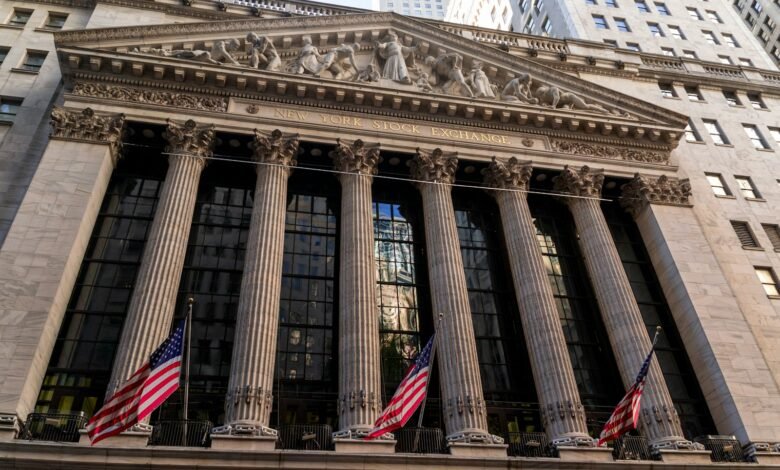
Wall Street ended trading on Friday, September 18, 2026, mixed, in a session that saw concerns about inflation and borrowing costs return to the forefront of global markets after the benchmark U.S. Treasury yield surpassed 5%, while oil prices remained above $100 a barrel. The moves came just two days after the Federal Reserve raised interest rates for the first time since 2023, presenting investors with a more difficult equation between the strength of some technology stocks and tighter financial conditions.
5% Yield Weighs on Risk Appetite
According to Reuters, U.S. stocks closed mixed on Friday as Treasury yields rose, with higher financing costs becoming a source of pressure on stock valuations and on corporate and household spending expectations. Technology stocks performed relatively better, supported by semiconductor companies, while other sectors faced greater pressure.
A single day’s movement does not in itself signal a change in the market’s direction, but it highlights investors’ growing sensitivity to the bond market. When long-term yields rise, bonds become more attractive compared with some riskier assets, while the discount rates used to value companies’ future cash flows also increase.
Fed Raises Interest Rate to 3.75%–4.00%
On September 16, the Federal Reserve decided to raise the target range for the federal funds rate by 25 basis points to 3.75%–4.00%. The decision was unanimous, and the Federal Open Market Committee said economic activity was expanding at a solid pace and that domestic spending had remained resilient, but inflation was still elevated.



The U.S. central bank said the tightening move was aimed at supporting a faster return of inflation to its 2% target. It also began implementing the new range effective September 17, raising the interest rate paid on reserve balances to 3.90% and increasing the primary credit rate to 4.00%.
Oil Adds a New Layer of Concern
Bond-market pressure coincided with Brent crude remaining above $100 a barrel, despite its decline in Friday’s session. Investors fear that persistently high energy prices could fuel price pressures in transportation, industry and supply chains, making central banks’ task of bringing down inflation more complicated.
In Friday’s session, Brent crude fell 0.9% to $103.89 a barrel, while West Texas Intermediate declined 1.2% to $100.74, according to Reuters. The energy outlook remains highly sensitive to geopolitical tensions and supply disruptions in the Middle East.
What Will Markets Watch Next?
Attention will turn to U.S. inflation and labor-market data, as well as any new signals from Federal Reserve officials regarding the October 27–28 meeting. The central bank’s calendar shows that the next meeting will be followed by a press conference, increasing the importance of data released in the coming weeks in shaping interest-rate expectations.
For investors globally, the combination of three factors at once — higher interest rates, elevated bond yields and oil above $100 — means volatility could remain present. Markets therefore appear to be testing their ability to absorb a new round of financial tightening without a sharp shift in growth or corporate earnings expectations.