
Is a Man’s Prayer at Home Valid If He Is Able to Go to the Mosque? Documented Answer by Sheikh Ibn Baz
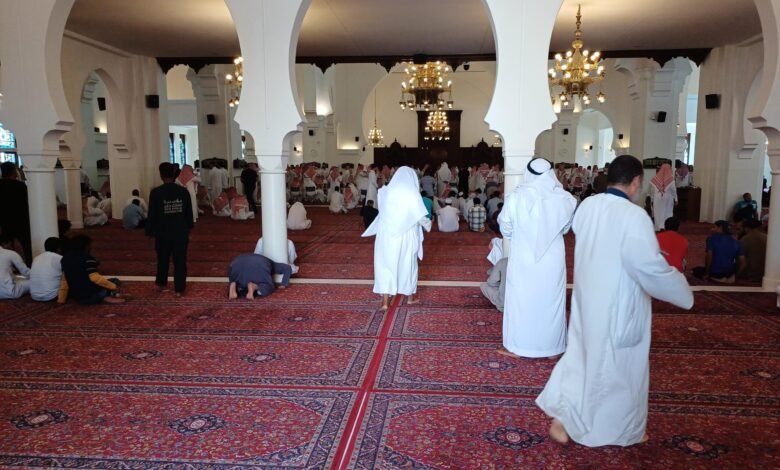
A question frequently asked by many Muslims is: Is a man permitted to perform an obligatory prayer at home when he is able to go to the mosque? Is his prayer valid if he prays alone without an excuse? This article does not issue a fatwa on behalf of Bareeq Media News; rather, it summarizes an officially published answer by Sheikh Abdulaziz bin Baz, may Allah have mercy on him, while explaining the point of disagreement he mentioned regarding the matter.
Question: Is a man permitted to pray the obligatory prayer at home without an excuse?
In an answer published on Sheikh Abdulaziz bin Baz’s official website under the title “Ruling on Praying at Home Without an Excuse,” he was asked about a man who performs the five daily prayers at home even though the mosque is near him. The Sheikh stated that a man who is able to attend the mosque should not fail to attend the congregational prayer without a valid Islamic excuse, and that it is obligatory for him to pray with the Muslim congregation.
The Sheikh cited what is established in the Sunnah regarding the Prophet’s command to respond to the call to prayer, including the story of the blind man who sought permission to pray at home. The Prophet peace and blessings be upon him asked him: “Can you hear the call to prayer?” When he answered yes, he said to him: “Then respond to it.” The basis of this hadith is established in Sahih Muslim.
Is prayer at home valid if there is no excuse?
There is an important point in the Sheikh’s answer that should be conveyed accurately and not shortened in a way that suggests consensus among jurists. Ibn Baz stated that most scholars consider a man’s prayer at home without an excuse to be valid, although he sins by failing to attend the congregation, while some scholars held that it is invalid. In several of his answers, the Sheikh preferred the view that the prayer is valid, while the person is sinful, and stressed the obligation to repent and maintain attendance at congregational prayer.
Thus, it is not the case that praying alone at home is “invalid by scholarly consensus”; that would be incorrect. Rather, there is disagreement over the validity of the prayer, while Sheikh Ibn Baz emphasized that congregational prayer is obligatory for an able-bodied man who hears the call to prayer and is not prevented by a valid Islamic excuse.
When is a man considered excused?
In his answers, the Sheikh referred to excuses such as illness, fear and similar circumstances that genuinely prevent a person from reaching the mosque. In another answer, he also distinguished between someone whose mosque is close enough for him to hear the customary call to prayer and reach it, and someone who lives far away and would find attendance difficult.
He noted that loudspeakers may carry the call to prayer over long distances. Therefore, merely hearing the call through a powerful loudspeaker from a distant location is not, by itself, a sufficient criterion for determining that the mosque is nearby; distance, ability and the degree of ordinary hardship must also be considered.
What about praying at the workplace?
In another official answer titled “Ruling on Praying at Home or at Work and Failing to Attend Congregational Prayer,” the Sheikh affirmed that anyone who is able to respond to the call to prayer and has no valid Islamic excuse must make every effort to attend the congregational prayer. Accordingly, ordinary work-related preoccupation should not be turned into a general basis for abandoning congregational prayer, while recognizing that excuses and exceptional circumstances vary according to people’s situations.
Conclusion
According to Sheikh Abdulaziz bin Baz’s position in the official sources cited: Congregational prayer is obligatory for an able-bodied man who can attend and is not prevented by an excuse, and failing to attend without an excuse is impermissible. As for a prayer performed at home, he stated that the majority of scholars consider it valid, although the person is sinful, while another view holds that it is invalid. Anyone with a valid excuse, such as illness, fear or a distance that makes reaching the mosque difficult, is subject to a ruling appropriate to his circumstances.
Note: This article is an editorial summary of published scholarly sources and is not a fatwa issued by Bareeq Media News. Anyone with a specific case or unusual circumstances should preferably consult an official fatwa authority or a trusted scholar while explaining the details of their situation.
Sources
Official website of Sheikh Abdulaziz bin Baz: Ruling on Praying at Home Without an Excuse.
Official website of Sheikh Abdulaziz bin Baz: Ruling on Praying at Home Without an Excuse – Explanation of the Disagreement Over the Validity of the Prayer.
Official website of Sheikh Abdulaziz bin Baz: Ruling on Praying at Home or at Work and Failing to Attend Congregational Prayer.
Official website of Sheikh Abdulaziz bin Baz: Ruling on Praying at Home When the Mosque Is Far Away.