
From Play to Focus: 7 Home Activities That Strengthen Your Child’s Learning Skills by Age
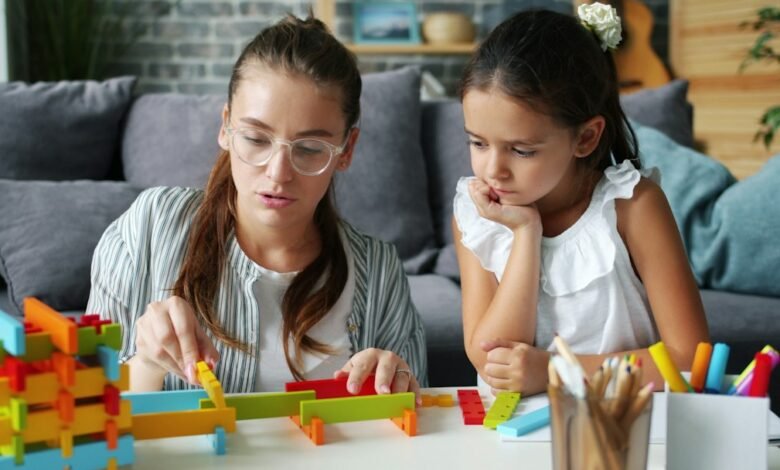
Supporting a child’s learning at home does not require lots of worksheets or expensive tools. Play, conversation and simple daily tasks can become valuable opportunities to practise attention, memory, language, planning and problem-solving. UNICEF points out that play is an essential part of learning, while Harvard University’s Center on the Developing Child explains that age-appropriate activities and games help children practise executive-function skills such as focus, working memory and self-control.
Below are seven practical activities families can do at home, adapting the level of difficulty to the child’s age and abilities, without turning playtime into a test or exhausting competition.
1. “Where Did It Go?” for Young Children
Suggested age: Approximately 1–3 years.
Choose a safe toy the child knows, then hide it partially under a piece of cloth and let the child look for it. With slightly older children, hide two or three objects and offer simple clues. This game helps children practise observation and memory, and understand that an object may still exist even when they cannot see it.

UNICEF recommends simple search-and-hide games as learning activities for young children. Make sure the objects are large enough to avoid a choking hazard, and that play takes place under adult supervision.
2. Sort the Things Around You
Suggested age: 2–5 years.
Use safe household items such as clean socks or large blocks, and ask the child to sort them by colour, size or type. Once the child has mastered one rule, try changing it: “This time, let’s put the big things together.”
Changing the sorting rule encourages children to think flexibly rather than repeat a memorised action, and can support attention skills and the ability to shift between rules.
3. Complete the Story
Suggested age: 4–8 years.
Begin with a short sentence such as, “On Friday morning, Salem found a small box near the door…” Then ask the child to add a sentence, followed by another person adding a new sentence. Do not look for a perfect story; the goal is for the child to remember what happened, connect ideas, and use language and imagination.
UNICEF suggests taking turns telling stories as a screen-free activity at home. After the story ends, the family can draw a scene from it or choose a title for it.
4. The Sequential Instructions Challenge
Suggested age: 4–7 years.
Start with two simple instructions: “Get the book, then put it on the table.” If that becomes easy, add a third step. Make the instructions part of natural daily tasks rather than presenting them as a test.
This type of activity trains children to hold information briefly and use it to complete a task. If the child makes a mistake, calmly repeat the instructions or reduce the number of steps.
5. An Indoor Treasure Hunt
Suggested age: 5–9 years.
Choose safe objects and hide them in suitable places, then write or give short clues: “Look in the place where we keep the books.” For younger children, use colours or pictures instead of words.
The game combines reading or listening, problem-solving and awareness of surroundings. Before starting, clearly define the play area, and keep medicines, cleaning products, sharp tools and places that require climbing out of reach.
6. “Plan, Then Do”
Suggested age: 7–12 years.
Choose a small project, such as organising a bookshelf or preparing a bag for a family activity. Before beginning, ask the child to write three or four steps in order and identify what is needed. Then review the plan together after finishing: What worked? What could be changed?
Harvard University’s Center on the Developing Child explains that executive functions include planning, focusing attention, managing information and adjusting a plan when necessary, and that children develop these abilities through practice and interaction.
7. Ten Minutes to Solve a Real Problem
Suggested age: 8–12 years.
Use a safe everyday situation, such as: “We have lots of books and limited space. How should we arrange them?” Ask the child to suggest three solutions, then discuss one advantage and one disadvantage of each solution and choose one to try. Do not immediately step in with the answer; give the child time to think.
How Can You Make the Activity Helpful Without Creating Pressure?
- Choose an activity suited to the child’s age and ability, not age alone.
- Keep the session short if the child begins to lose interest.
- Praise effort, persistence and thinking—not just the result.
- Let the child suggest changes or new rules for the game.
- Do not compare the child’s performance with that of siblings or peers.
- Keep safety in mind, especially with young children, small parts and active games.
Most importantly, these activities should remain a space for connection and curiosity. The goal is not to accelerate a child academically, but to give them repeated opportunities to use thinking, attention, language and planning in an enjoyable context suited to everyday life.