
The Correct Form of Prayer from the Opening Takbir to the Salam: A Documented Practical Guide
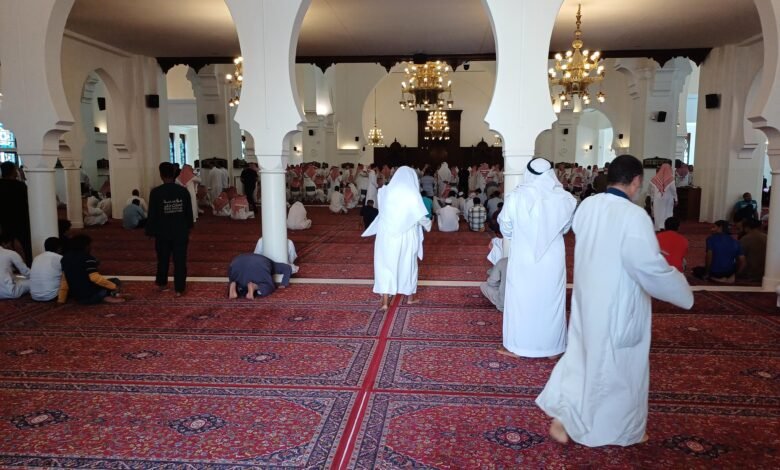
Prayer is the greatest practical pillar of Islam after the two testimonies of faith. For this reason, learning how to perform it in the manner authentically established from the Prophet ﷺ is among the most important things a Muslim needs. The Prophet ﷺ said: “Pray as you have seen me pray,” narrated by al-Bukhari. In this article, we present a brief, practical description of the prayer based on the authentic Sunnah and material published on the official website of Sheikh Abdulaziz bin Baz, while avoiding presenting matters of legitimate flexibility in Islamic jurisprudence as a single form that may not be deviated from.
The Intention and the Opening Takbir
The worshipper holds in his heart the intention of the prayer he wishes to perform, whether obligatory or voluntary; there is no need to verbalize the intention, as its place is the heart. He then faces the qiblah and says, “Allah is the Greatest,” raising his hands to the level of his shoulders or ears, as established in the Sunnah, and then places his right hand over his left while standing.
After the takbir, it is prescribed to recite one of the established opening supplications, followed by seeking refuge with Allah, saying the basmalah, and reciting Surat al-Fatihah. After al-Fatihah, he recites whatever is easy from the Quran in the places where an additional recitation is prescribed.
Bowing and Rising from It
The worshipper says the takbir and bows, placing his hands on his knees. He remains composed in his bowing and says, “Glory be to my Lord, the Magnificent.” Composure is not merely a formal matter: the Prophet ﷺ instructed the man who performed his prayer improperly to repeat it and taught him to remain composed while bowing, standing, prostrating and sitting.
He then rises from bowing, saying, “Allah hears those who praise Him,” if he is an imam or praying alone, and after standing upright says, “Our Lord, to You belongs all praise,” or one of the other authentically reported wordings. As for the person praying behind an imam, he says while rising, “Our Lord, to You belongs all praise.”
Prostration and Sitting between the Two Prostrations
After standing upright, the worshipper moves into prostration while saying the takbir. He prostrates on the seven body parts: the forehead together with the nose, the palms, the knees and the toes. He remains composed in prostration and says, “Glory be to my Lord, the Most High.” It is prescribed for him to offer whatever lawful supplication he can in prostration.
He then raises his head while saying the takbir and sits composed between the two prostrations, saying, “My Lord, forgive me.” He then performs the second prostration in the same manner as the first. After that, he rises for the next rak‘ah and performs it in the same manner.
The Tashahhud and Sending Blessings upon the Prophet ﷺ
In a three- or four-rak‘ah prayer, he sits after the first two rak‘ahs for the first tashahhud, then rises to complete the prayer. In the final rak‘ah, he sits for the final tashahhud and recites the established tashahhud, then sends blessings upon the Prophet ﷺ using the Ibrahimic prayer. He seeks refuge in Allah from the matters for which seeking refuge before the salam has been established, and he may offer whatever supplication he wishes for good.
He then turns to his right and says, “Peace and Allah’s mercy be upon you,” and says the same while turning to his left. With this, the prayer ends.
Composure Is an Essential Part of the Prayer
One of the meanings most emphasized by the texts concerning the manner of prayer is composure; bowing and prostration should not be merely rapid transitions between movements. Scholars have cited the hadith of the man who performed his prayer improperly as evidence that composure is obligatory in the pillars of prayer. Therefore, the worshipper should stand upright after bowing and remain settled in prostration and while sitting between the two prostrations for as long as is necessary to achieve composure.
Are All Details of the Manner of Prayer Agreed Upon?
The general form of the prayer is established, but there is معتبر disagreement among scholars concerning some postures and minor details, due to variations in the transmitted reports or differences in how they are understood. These include some ways of placing the hands and certain supplications and Sunnah practices. Therefore, it is not correct to condemn others over matters of recognized scholarly interpretation as though one form in every detail were the only correct one.
It is preferable for a Muslim to learn the prayer from reliable scholarly sources and to ask qualified scholars about anything unclear to him, particularly matters related to the validity of the prayer or the omission of a pillar or obligation.
Sources
The official website of Sheikh Abdulaziz bin Baz: “The Manner of the Prophet’s Prayer ﷺ from the Opening Takbir to the Salam” — https://binbaz.org.sa/fatwas/10166/
The official website of Sheikh Abdulaziz bin Baz: “An Explanation of How to Perform Ablution and Prayer” — https://binbaz.org.sa/fatwas/4022/
The official website of Sheikh Abdulaziz bin Baz: “Imams Are Obliged to Pray as the Prophet ﷺ Prayed” — https://binbaz.org.sa/fatwas/20523/
Note: This is general educational material. In specific matters, or in cases involving forgetfulness, illness or incapacity, reliable scholars should be consulted.